Organizational structures
Maintain department and role hierarchies with reviewed change history.


Manage organizational structures, personnel records, and appointment processes with scoped access and audit trails. Assess deployment and information-handling requirements upfront.

Model organizational hierarchies, personnel records, and appointment workflows. Apply role-based permissions and trace changes across the record lifecycle.
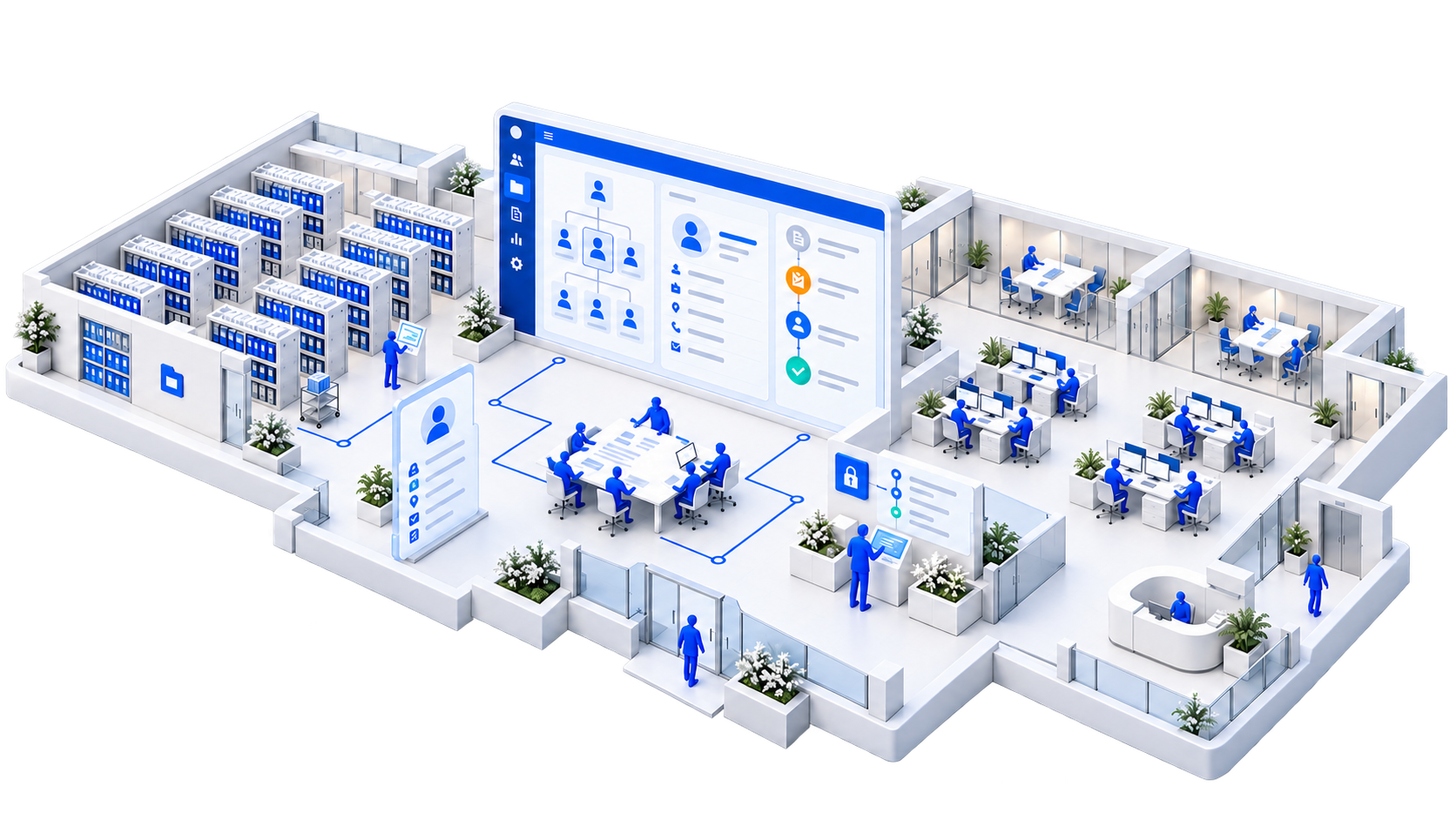
Maintain department and role hierarchies with reviewed change history.
Manage personnel profiles and history with scoped access and record-level auditability.
Track team composition and changes using consistent personnel and organizational references.
Record proposals, reviews, decisions, and effective dates with explicit approval responsibilities.
Scope view, edit, and export rights by role and organizational boundary, with audit records for sensitive actions.
Define supported devices, mobile data scope, authentication, and synchronization controls.
Capabilities are scoped to source-system access, field conditions, and operational responsibilities.
Review applicable organizational requirements, exchange formats, and the target infrastructure before implementation.
Map the organization’s policies and review procedures to system requirements and acceptance tests.
Supports standardized data import and export formats for seamless integration and one-click data exchange.
Validate the agreed operating systems and databases in the target environment. Compatibility is confirmed through testing.
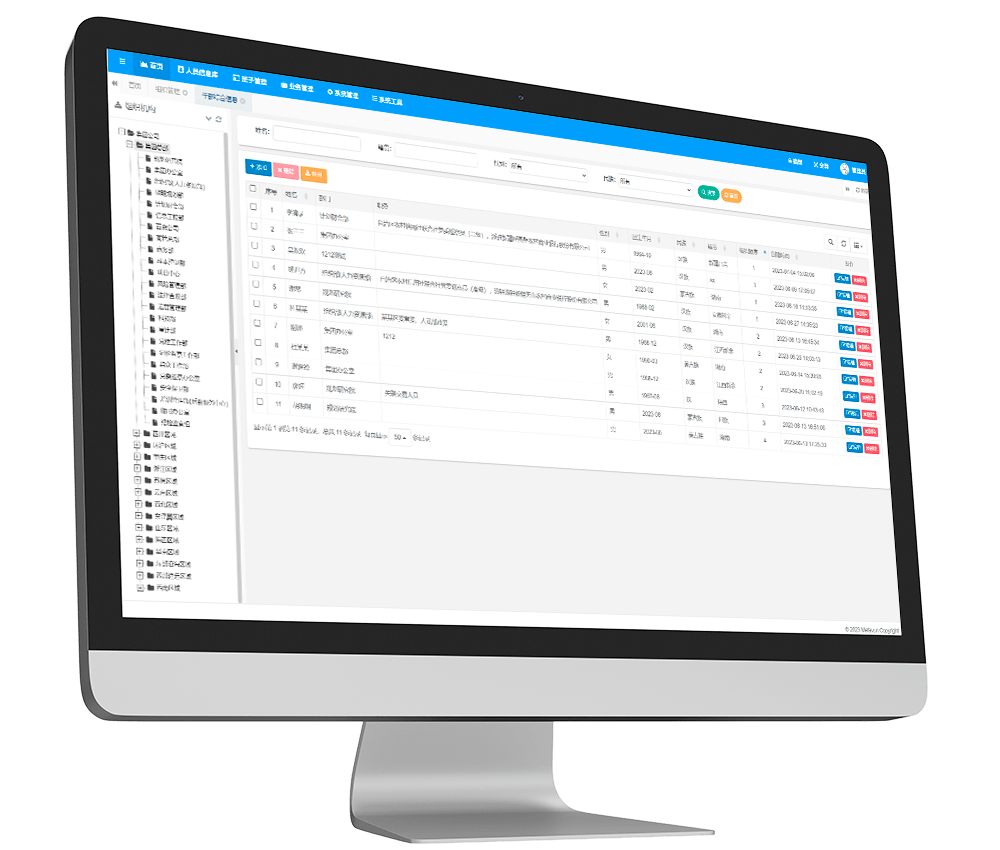
Designed around common enterprise workflows, the system is intuitive and easy to use. Every action is logged automatically, ensuring traceability and accountability.
Core leadership and organizational management functions are readily available, while less-used features can be flexibly configured.
Role-based, hierarchical permission settings improve efficiency while ensuring data security for large organizations.
Combine multiple data attributes—such as role, rank, and department—to quickly identify and filter relevant personnel records.
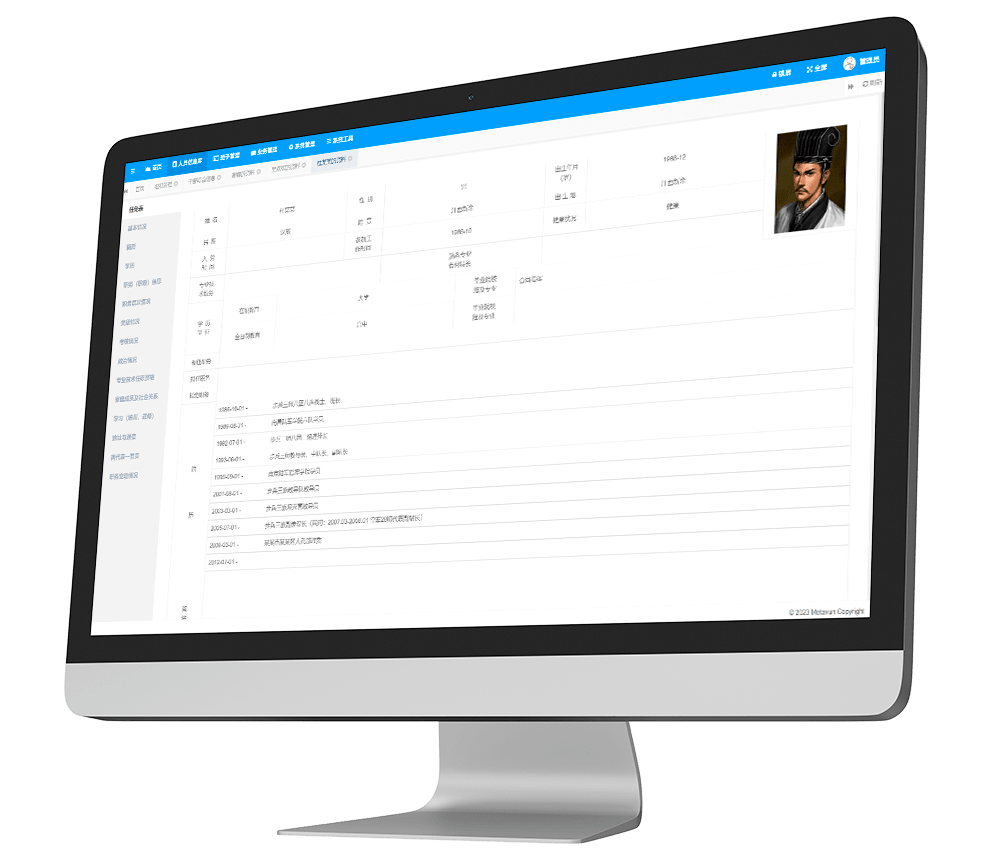
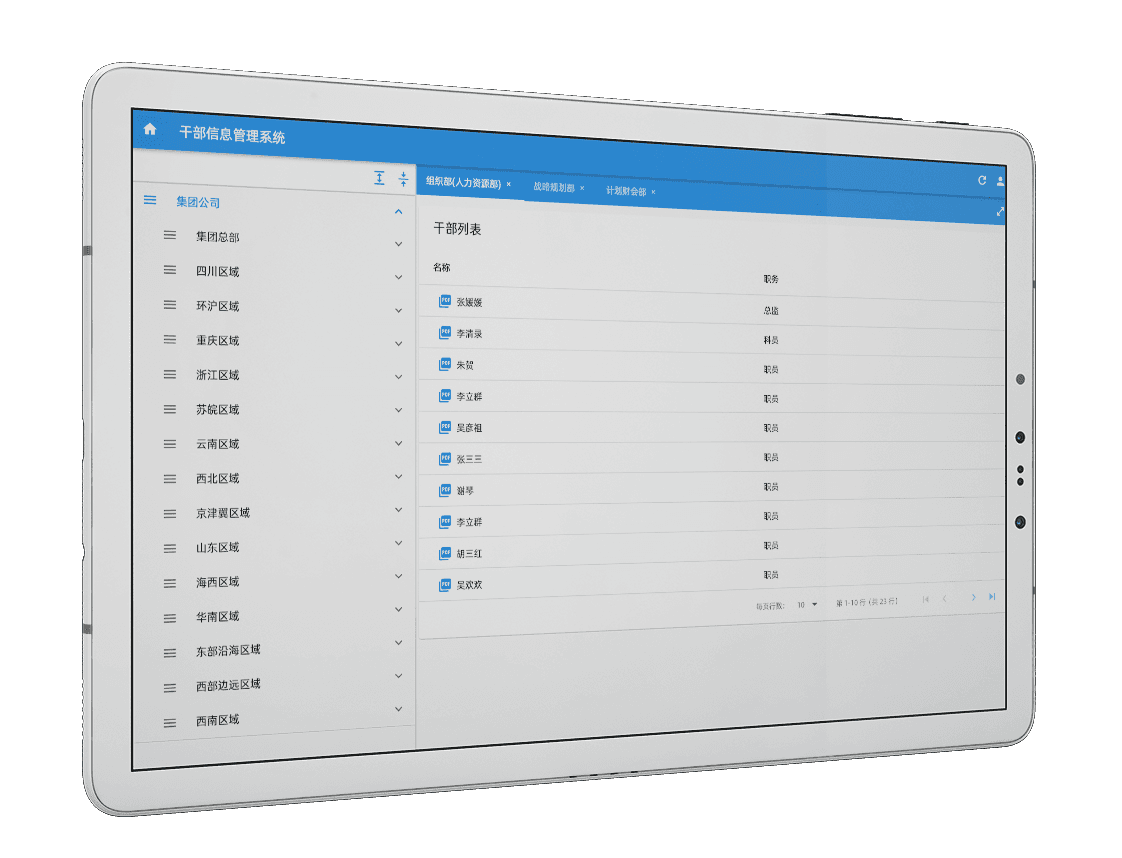
Access the system seamlessly on smartphones and tablets to improve flexibility and on-the-go productivity.
Secure, automatic data synchronization within trusted network environments enables smooth offline usage.
View key information even when offline—ensuring uninterrupted access wherever work takes place.
Define which records may synchronize, to which devices, and under what access and retention policies.
Where permitted, cache only approved records with device protection and expiry controls. Offline availability depends on the agreed security policy.
Use operational evidence to prioritize improvements and assess results.

Powerful automation and standardized workflows simplify management processes, reduce repetitive tasks, and significantly improve productivity—freeing teams to focus on core priorities.
Centralized data, analytics, and reporting tools provide leaders with clear insights into organizational performance—enabling faster, more accurate, and lower-risk decision-making.
Comprehensive leadership management capabilities—including selection, appointment, training, and evaluation—help systematically develop talent and strengthen organizational competitiveness.
Advanced access control and security mechanisms protect sensitive information from unauthorized access or misuse, ensuring data integrity, confidentiality, and compliance.