Environmental monitoring
Ingest supported sensor readings with calibration metadata, timestamps, and quality checks.


Integrate field sensors, observation records, and patrol operations. Design for intermittent connectivity, alert review, and traceable incident handling.
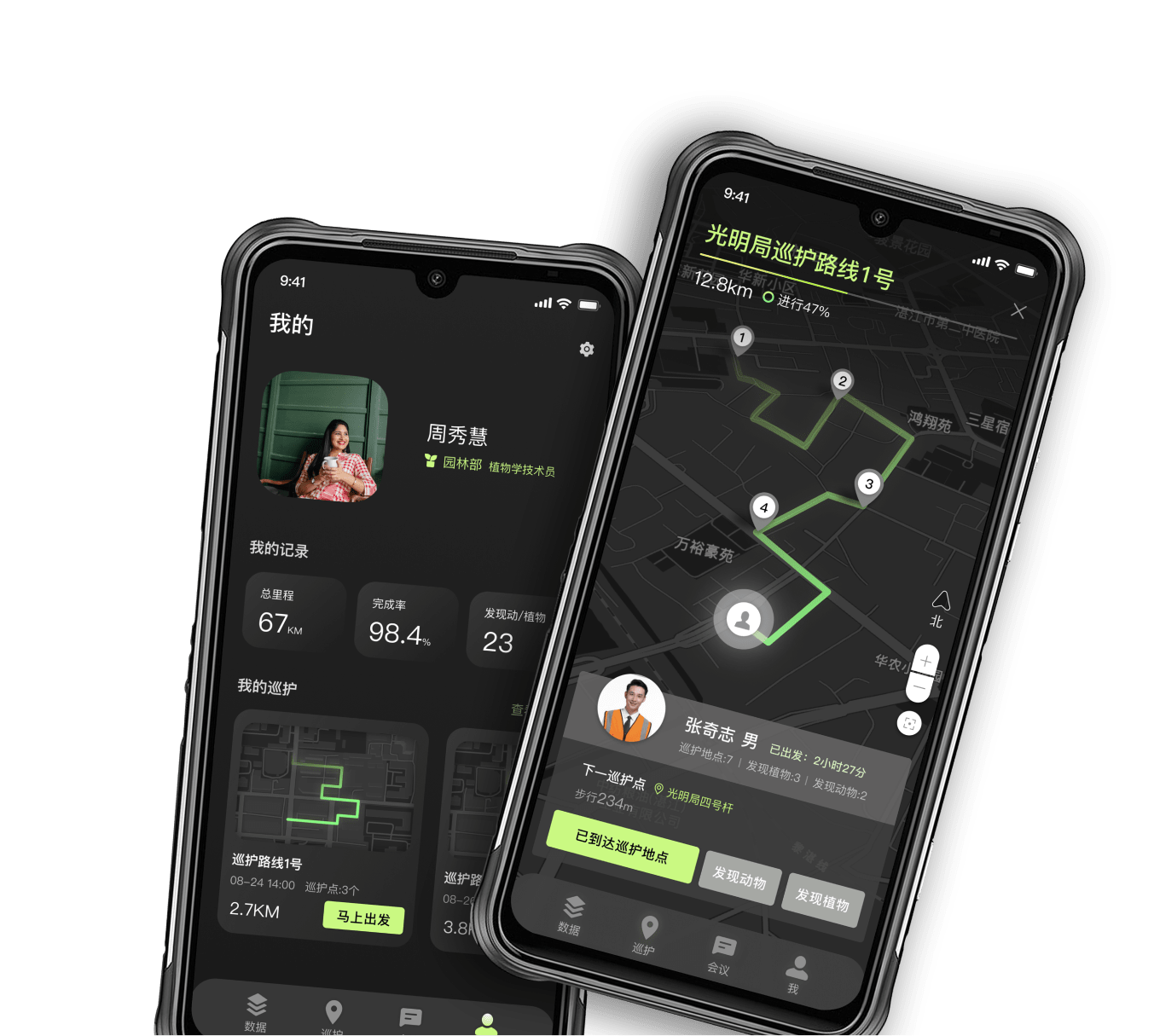
Normalize telemetry and field observations with timestamps and source metadata. Define thresholds, review responsibilities, and response workflows.
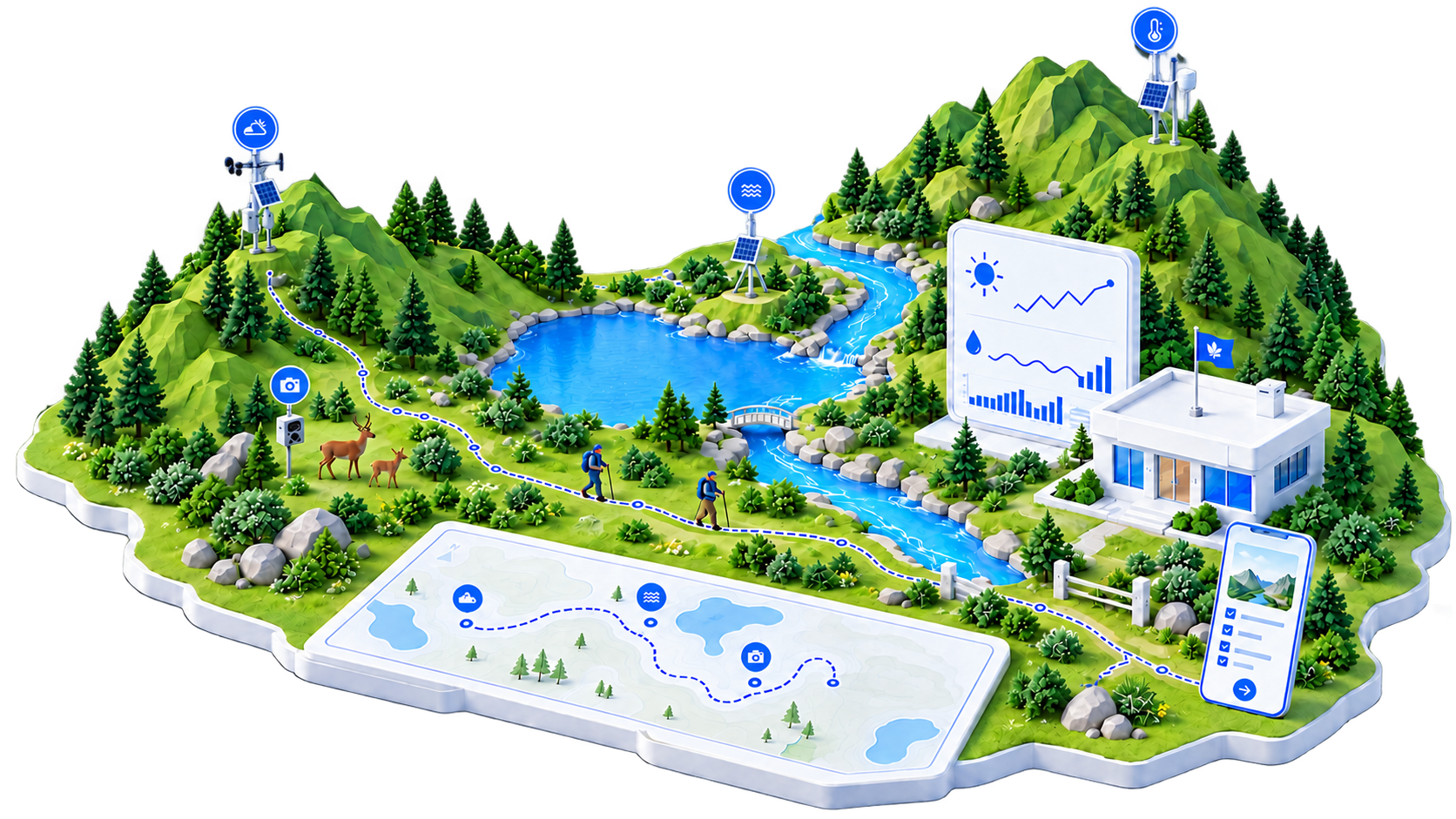
Ingest supported sensor readings with calibration metadata, timestamps, and quality checks.
Link camera and field observations to reviewed species records. Validate automated identification before operational use.
Route threshold and pattern alerts to responsible teams with source evidence and acknowledgement tracking.
Compare spatial and temporal patterns while accounting for sensor quality and data gaps.
Manage routes, assignments, and observations with synchronization designed for field connectivity.
Share incident records and status across authorized teams through the available communications infrastructure.
Capabilities are scoped to source-system access, field conditions, and operational responsibilities.
A core component of the smart IoT management system, environmental monitoring provides critical data to support daily operations, decision-making, emergency response, and scientific research.
Collect and store environmental data using efficient industry-standard protocols, covering climate conditions, air quality, soil quality, and water resources.
Intuitive dashboards display real-time and historical sensor data, enabling managers to instantly understand environmental conditions.
High-performance data storage and AI-powered analytics support advanced insights such as predictive, trend, and correlation analysis.
Configure alert thresholds for sensors to automatically trigger warnings when abnormal conditions are detected.
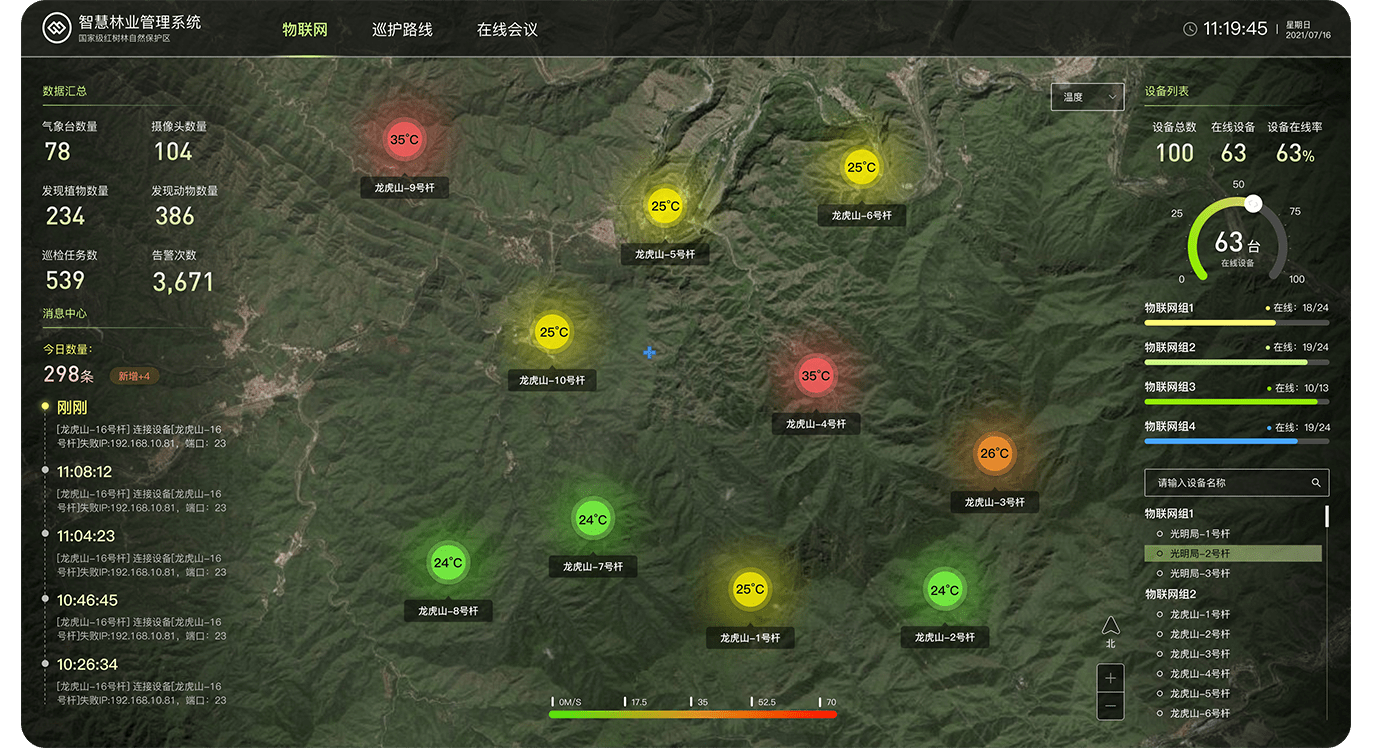
Improve patrol efficiency and safety, strengthen incident response and team coordination, and generate valuable data inputs for ongoing analysis.
Configure patrol routes and schedules to ensure rangers execute tasks efficiently and as planned.
Enable patrol staff to use mobile apps on smartphones or professional devices for data entry, route guidance, and task updates.
Track ranger locations and movement paths in real time through positioning sensors to ensure safety and accountability.
Record field observations and trigger timely responses when significant environmental or wildlife events are detected.
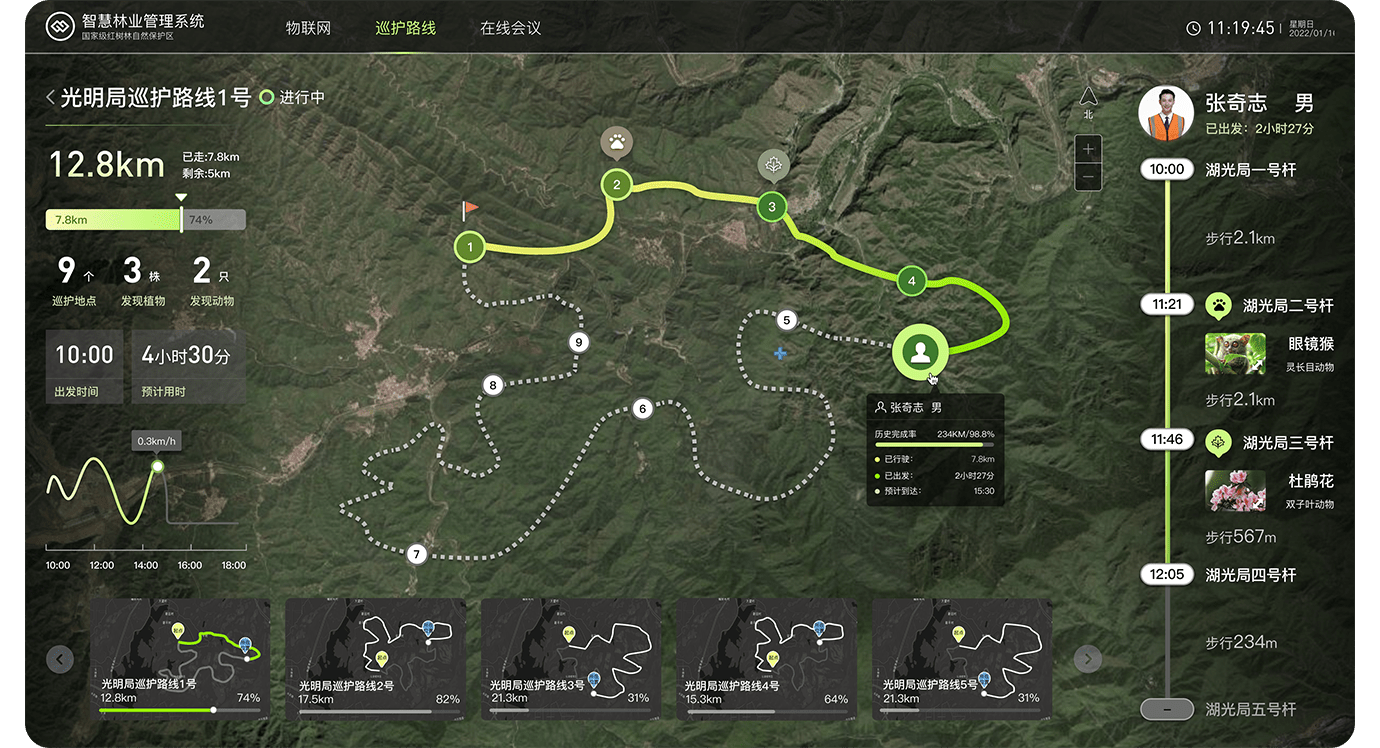
Use operational evidence to prioritize improvements and assess results.
Continuous, real-time monitoring through diverse sensors delivers precise insights into climate conditions, wildlife activity, soil quality, water resources, and more.
Leverage big data analytics and AI to predict environmental trends, evaluate conservation strategies, and provide a scientific foundation for informed decisions.
Enable automated patrols and intelligent protection through drones, AI-powered species recognition, and automated detection and alerts for illegal activities.
Share real-time ecological information with the public to raise awareness, transparency, and participation in environmental protection.