From requirements through delivery — software engineered for your exact business logic
Custom Software Development
We design and build software from the ground up to fit your specific workflows — not adapting templates or forking open-source projects. The engagement covers requirements engineering, architecture design, iterative delivery, and full handover: complete source code, documentation, and operational runbooks. You own everything.


Define requirements precisely before writing a line of code
We invest as much time in upfront requirements engineering and architecture design as we do in development. Business process flows, data models, API contracts, and interaction prototypes are all validated with your team before the first sprint begins. Delivery is modular and iterative — each release is preceded by functional testing, load testing, and security scanning. Handover includes complete technical documentation so your team or any future maintainer can operate the system independently.
Off-the-shelf software doesn't fit your business logic
Every organization has processes that don't map cleanly onto generic software. When ERP, OA, or SaaS tools fall short, custom development is the only path to a system that actually fits the way your business operates.
Core workflows don't map to available tools
Purchased systems cover 80% of your processes but break down on the 20% that matter most. The workaround is inevitably a maze of Excel sheets maintained in parallel — slow, error-prone, and invisible to reporting.
Vendor lock-in makes change expensive
Source code lives with the original vendor. Bug fixes require a ticket queue. Feature requests incur additional charges. Switching costs compound over time, and you're permanently in a reactive posture.
Ambiguous requirements surface late
Stakeholders have different mental models of the same process. Developers build on assumptions. The gap only becomes visible at acceptance testing — by which point rework is expensive and timeline pressure is high.
Legacy systems accumulate technical debt
Years of patch-on-patch development without architectural discipline. Nobody wants to touch the core logic. Every release is a risk event rather than a routine operation.
Project timelines slip repeatedly
Scope changes compound, multi-party coordination breaks down, and milestone dates shift until the original go-live plan is meaningless. Business windows close while delivery catches up.
Post-launch impact is unmeasurable
No instrumentation means no visibility into which features are used, which solve the actual problem, and which should be dropped. The next iteration has no data to work from.

Every delivery decision is traceable back to a requirement
Structured requirements engineering turns vague intent into a prioritized feature backlog. Modular delivery means each milestone ships something testable and usable. Nothing lands in production without a validated requirement behind it.
Requirements alignment before development starts
Business process diagrams, data dictionaries, and interaction prototypes make requirements concrete and reviewable by all stakeholders before a single sprint is scoped. Ambiguity surfaces early, when it's cheap to resolve.
Modular architecture built for extension
System boundaries are drawn along business domain lines. Modules communicate through explicit interfaces. Adding a new feature or integrating a third-party system doesn't require touching the core — it's a new module on top of stable contracts.
Quality gates on every release
Code review, automated test suites, and security scanning are mandatory pre-release steps, not optional add-ons. Every line of code in the handover has been through the review pipeline.
Complete documentation in the handover package
Architecture diagrams, database schemas, API specifications, and operational runbooks are delivered alongside source code. Your team — or any future maintainer — can onboard without calling us.
Iterative delivery, continuous feedback
Systems ship in modules, not as a single big-bang release. Each module goes live, generates real-world feedback, and informs the next iteration. Large-scale rework at final delivery becomes structurally unlikely.
Full IP transfer on project close
All source code, database scripts, and configuration files transfer to you on completion. You hold complete intellectual property. No vendor dependency, no hidden backdoors, no constraints on future maintenance providers.
Clear deliverables and acceptance criteria at every milestone
From requirements through post-launch operations, each phase closes with documented deliverables and stakeholder sign-off before the next begins.
Requirements discovery & analysis
Structured interviews with business domain owners. Process flows, pain points, and functional priorities captured in a requirements document signed off before architecture begins.
Requirements discovery & analysis
Structured interviews with business domain owners. Process flows, pain points, and functional priorities captured in a requirements document signed off before architecture begins.
Architecture design & prototyping
System architecture, data model, and API contracts designed based on requirements. Interactive prototype produced for UX validation. Architecture decision records documented.
Architecture design & prototyping
System architecture, data model, and API contracts designed based on requirements. Interactive prototype produced for UX validation. Architecture decision records documented.
Iterative development & testing
Feature delivery in two-week sprints. Each sprint closes with a testable increment and stakeholder demo. Feedback collected continuously and fed into the backlog.
Iterative development & testing
Feature delivery in two-week sprints. Each sprint closes with a testable increment and stakeholder demo. Feedback collected continuously and fed into the backlog.
Pre-production testing & release
Functional regression, load testing, and security scanning completed before each production release. Rollback plan documented and tested.
Pre-production testing & release
Functional regression, load testing, and security scanning completed before each production release. Rollback plan documented and tested.
Documentation handover & training
Technical documentation, API specs, operational runbooks, and user guides delivered. Key personnel trained on system administration and day-to-day operations.
Documentation handover & training
Technical documentation, API specs, operational runbooks, and user guides delivered. Key personnel trained on system administration and day-to-day operations.
Post-launch operational support
SLA-backed operational support during the warranty period. Monitoring configured. Incident response process agreed and tested.
Post-launch operational support
SLA-backed operational support during the warranty period. Monitoring configured. Incident response process agreed and tested.
Representative use cases
Custom development is the right choice wherever available tools fail to fit your operational reality.
Internal operations systems
Workflow automation, approval chains, contract management, and compliance tracking — built to your process, not the other way around.
Core business systems
Production, sales, procurement, and inventory systems where business logic is complex enough that generic software creates more problems than it solves.
Data consolidation & reporting
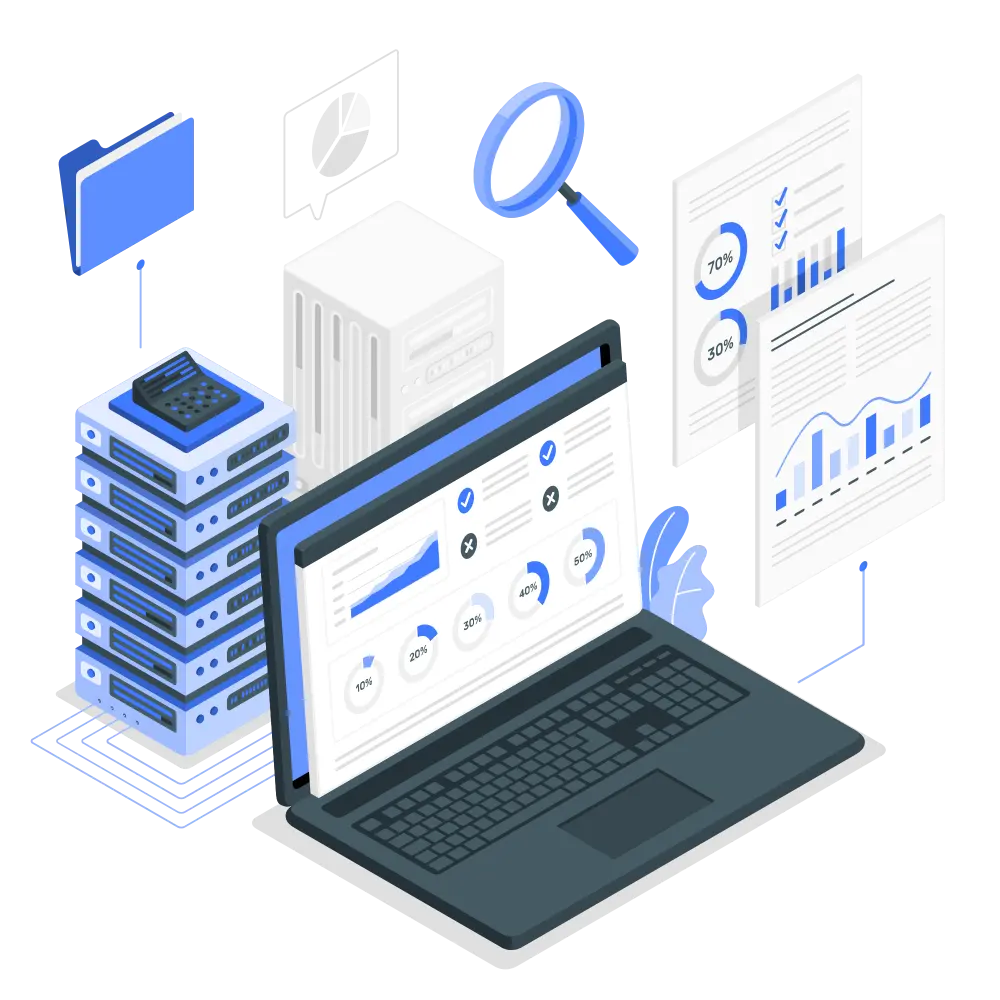
Unified access layer over multiple source systems, with reporting and dashboards that give management a single source of truth.
Customer-facing platforms
Portals, booking systems, and service platforms designed around the customer journey, not the internal system model.
System integration & interoperability
Connecting existing systems through APIs or middleware to enable data synchronization and process automation — eliminating manual handoffs between systems.
Government & regulatory systems
Records management, administrative approval workflows, and regulatory reporting — built to compliance requirements with private deployment support.
Why Metavun
10+ years of enterprise software delivery. We know where large projects break down — and how to prevent it.
Structured requirements engineering
A proven methodology for converting ambiguous stakeholder intent into a prioritized, reviewable feature specification. Reduces mid-project pivots and final-delivery surprises.
Enforceable code quality standards
Coding standards, peer review workflow, and automated test requirements are process constraints, not aspirations. The handover is production-grade engineering, not a prototype.
Clean IP transfer
Complete source code ownership transfers on project close. No lock-in, no hidden dependencies, no restrictions on which team maintains it next.
Long-term maintainability by design
We've maintained several systems for 5+ years. The architectural decisions made at build time either pay dividends or create debt — we know the difference.
Government procurement & compliance experience
Familiar with government procurement requirements, security classification standards, and domestic software substitution policies. We navigate compliance requirements as part of delivery, not as an afterthought.
Private deployment as a standard option
Every system we build can be deployed entirely within your network perimeter. No SaaS dependency, no data leaving your control — a hard requirement for many of our government and regulated enterprise clients.
Who we build for
Organizations with specific operational problems that available software cannot solve.
Government & state enterprises
Compliance, audit trail, and private deployment requirements that commercial SaaS cannot meet.
Manufacturing & industrial
Production management, quality control, and supply chain logic that requires deep integration with existing equipment and systems.
Retail & commercial
Membership, promotion, and multi-channel inventory logic too complex for off-the-shelf retail platforms.
Public sector
Process digitization, records management, and inter-system integration with strict security and compliance constraints.
Multi-location retail & franchise
Standardized operations across locations with centralized data visibility — where off-the-shelf retail platforms can't accommodate the specific business model.
Holding companies & conglomerates
Unified management platform across multiple subsidiaries or business lines, with configurable boundaries that preserve operational independence where needed.
Core Technology Stack
Selected per engagement based on requirements — mainstream, actively maintained, and vendor-agnostic.

Let's Build Something Great Together
Whether you need a custom AI solution, legacy system modernization, or a production-grade data pipeline — we’re ready to scope, architect, and deliver.
Contact Us