Engineering capacity when you need it — vetted, on-boarded, and working to your standards
Technical Staff Augmentation
We provide flexible engineering resource: frontend, backend, full-stack, and AI engineers available for project-based or time-and-materials engagements, remote or on-site. Engineers work within your team, your toolchain, and your engineering standards. All IP transfers to you. Engagement scales up or down as delivery requirements change.


Hiring cycles are too slow for project-driven capacity needs
Most engineering capacity gaps aren't permanent headcount requirements — they're sprint peaks, specialist skill shortfalls for a defined project scope, or the period between a departure and a backfill hire. The permanent hire pipeline takes 3 months from requisition to productive contributor. Staff augmentation is the engineering equivalent of elastic compute: the capacity is there when you need it, scaled back when you don't, and you pay for actual utilization. The engineers we place have been assessed against the specific technical domain — not screened by a recruiter against keyword matches.
Capacity constraints are blocking delivery velocity
Engineering teams consistently face a gap between required delivery capacity and available headcount. Permanent hiring, full outsourcing, and doing without each have unacceptable tradeoffs.
Hiring pipeline too slow for immediate delivery needs
A competent engineer who understands your codebase takes 3 months to hire and another month to reach full productivity. Critical delivery windows close before the hire arrives.
Specific technical skills missing from current team
The team is strong in existing capabilities but lacks the specialist skills needed for a defined project scope — AI engineering, a specific framework, or a domain the team hasn't worked in before.
Delivery demand spikes don't justify permanent headcount
Sprint peaks, go-live crunches, and seasonal delivery cycles create genuine capacity requirements that don't sustain a full-time role. Hiring for the peak means cost overhead during the trough.
Full-project outsourcing creates quality and visibility problems
Fully outsourced projects have opaque progress, quality that reflects an external team's incentives, and handover documentation that rarely covers what the next team needs to know.
Key person departure creates a knowledge cliff
A critical engineer's departure takes institutional knowledge — system design rationale, undocumented quirks, vendor relationships — with them. Their replacement needs months to reach equivalent effectiveness.
Engineering quality varies by individual, not process
Without enforced standards, each external engineer leaves a distinct footprint. The codebase accumulates stylistic fragmentation that compounds maintenance cost over time.

Assessed engineers, integrated into your team, working to your standards
We provide engineers who've been assessed against specific technical domains — not sourced through keyword screening. They work inside your team structure, using your version control, CI/CD, and communication tools. Output is yours.
Deployment in 1–2 weeks, not 3 months
We maintain an assessed engineering pool. Engagement confirmation to first productive contribution typically takes 1–2 weeks. Project windows don't close while the resource pipeline catches up.
Technical assessment, not keyword screening
Engineers are evaluated against the technical domain relevant to your engagement — code review, architecture discussions, and domain-specific problem-solving. You know what you're getting before the engagement starts.
Integrated into your team, working to your standards
Engineers join your repository, your sprint ceremonies, and your code review process. They produce according to your engineering standards and style guides. You retain full visibility and control.
Specialist domain matching
Frontend, backend, full-stack, data engineering, and AI engineering available. Engineer selection is matched to the technical context of your specific engagement, not the nearest available generalist.
Elastic engagement — scale with delivery requirements
Headcount adjusts as project phases change. A sprint crunch that needs three engineers for six weeks, then one for ongoing maintenance, is a single engagement — not three separate hiring cycles.
Knowledge transfer built into engagement close
Documentation of work completed, architecture decisions made, and open work items is a contractual close-out requirement. Institutional knowledge doesn't leave with the engineer.
Requirements to productive contribution in two weeks
Structured process from needs assessment to engagement close, with clear accountability at each step.
Needs assessment & profile definition
Technical domain, stack specifics, working style preferences, and engagement duration confirmed. Profile requirements documented before candidate identification begins.
Needs assessment & profile definition
Technical domain, stack specifics, working style preferences, and engagement duration confirmed. Profile requirements documented before candidate identification begins.
Candidate identification & presentation
Candidates matched against profile requirements presented with technical background and relevant project history. Your team reviews and can conduct a technical interview before commitment.
Candidate identification & presentation
Candidates matched against profile requirements presented with technical background and relevant project history. Your team reviews and can conduct a technical interview before commitment.
Contract & NDA execution
Service agreement and NDA confirming scope, billing model, IP ownership, and confidentiality obligations signed before onboarding begins.
Contract & NDA execution
Service agreement and NDA confirming scope, billing model, IP ownership, and confidentiality obligations signed before onboarding begins.
Onboarding & environment setup
Repository access, toolchain setup, and codebase orientation completed in the first week. Structured onboarding reduces time to first productive commit.
Onboarding & environment setup
Repository access, toolchain setup, and codebase orientation completed in the first week. Structured onboarding reduces time to first productive commit.
Ongoing engagement management
Regular check-ins to assess performance against expectations. Issues surfaced early, before they affect delivery. Headcount adjustment requests processed with minimal lead time.
Ongoing engagement management
Regular check-ins to assess performance against expectations. Issues surfaced early, before they affect delivery. Headcount adjustment requests processed with minimal lead time.
Engagement close & knowledge transfer
Documented close-out: work completed, in-flight items handed over, architecture decisions recorded. Engagement ends without institutional knowledge gap.
Engagement close & knowledge transfer
Documented close-out: work completed, in-flight items handed over, architecture decisions recorded. Engagement ends without institutional knowledge gap.
Common engagement patterns
Staff augmentation is the right model when the capacity need is defined, temporary, or specialist in nature.
Sprint capacity reinforcement
Additional engineering capacity during high-pressure delivery periods — go-live preparation, backlog clearance, or a fixed launch milestone.
Specialist skill injection
Domain-specific technical capability for a defined project scope where building the skill internally would take longer than the project timeline.
New technology adoption
An experienced engineer to lead adoption of an unfamiliar technology — architectural guidance, code review, and knowledge transfer alongside delivery.
Sustained delivery partnership
Long-running engineering support for organizations where variable demand makes permanent headcount economically inefficient.
Key person departure backfill
Rapid deployment of an assessed engineer with equivalent technical background to maintain delivery continuity after a critical team member departs — minimizing the knowledge transfer gap.
Domain specialist engagement
Expert-level engineers for specific technical domains — AI/ML engineering, security review, or unfamiliar framework adoption — providing architectural guidance alongside delivery contribution.
Why Metavun
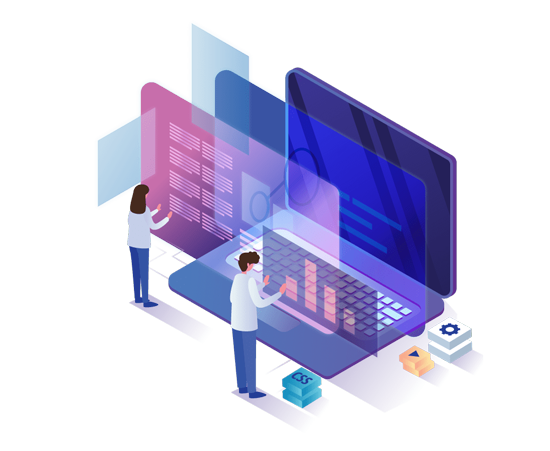
We assess our engineers against technical domains — not job titles. What you see in the profile is what you get on the engagement.
Technical assessment, not recruiter screening
We assess engineers against domain-specific technical criteria — not CV keywords. Technical capability is validated before candidate presentation.
Rapid deployment timeline
Maintained pool of assessed engineers means 1–2 week time-to-deployment. Delivery windows don't close while the resource pipeline catches up.
Flexible engagement model
Remote and on-site options. Per-project or time-and-materials billing. Headcount adjustable as delivery requirements change. No fixed minimum commitment.
Clean IP ownership
All work product produced during the engagement transfers to you under the engagement contract. No IP ambiguity, no post-engagement restrictions.
Standardized onboarding process
Structured onboarding covering codebase orientation, standard alignment, and knowledge transfer typically achieves first productive commit within one week — reducing the time-to-contribution gap that undermines most augmentation arrangements.
Complete confidentiality and IP framework
NDA scope, non-solicitation provisions, and IP ownership terms are explicitly defined in every engagement contract. Commercial sensitivity and code ownership are protected — not assumed.
Who we work with
Engineering teams with defined capacity gaps — temporary, specialist, or variable in nature.
Enterprise IT departments
Project delivery requirements that exceed current team capacity, without the justification to expand permanent headcount.
High-growth technology companies
Business growth outpacing hiring velocity — delivery needs to continue while the permanent team pipeline catches up.
Traditional enterprises with digitalization programs
Internal IT teams with domain knowledge but technical skill gaps in the specific technologies required for a digitalization initiative.
Software development companies
Project commitments that exceed current team bandwidth — additional engineering capacity for contracted delivery obligations.
Post-launch product teams
Products in the operations phase requiring ongoing maintenance and iteration — where a permanent full team would be over-resourced but zero coverage is not an option.
Teams managing multiple parallel projects
Concurrent projects with different technical requirements — flexible augmentation avoids duplicating permanent headcount across separate project teams.
Technical disciplines available
Coverage across the full web and backend stack. Engineer selection is matched to your specific technology context.






Let's Build Something Great Together
Whether you need a custom AI solution, legacy system modernization, or a production-grade data pipeline — we’re ready to scope, architect, and deliver.
Contact Us